While 90% of startups spend money based on wrong assumptions, and corporations throw billions on transformations that fail in 70% of cases, Noe changes the game. Our AI system accelerates learning and leads to better decisions – startups use it for a faster path to product-market fit (PMF), and corporations use it for precise transformations. In both cases, a single engine replaces months of guessing with reliable answers within days.
Problem – $2.4 trillion wasted annually
Innovation is expensive, slow, and mostly unsuccessful. Every year, over $3.3 trillion is spent on digital transformation and startup investments, but $2.4 trillion is wasted on decisions based on assumptions instead of data.
Startups build “from nothing,” and 90% fail because they test too late, too slowly, and without a clear learning plan. A typical example: a startup burns $80k in 4 months building three MVPs that nobody wants. “Looks good,” “we’ll try later” – sound familiar?
Corporations transform within the fixed constraints of complex systems where each step has far-reaching consequences, and 70% of initiatives end as costly pilots that fail to deliver expected results.
In both cases, organizations suffer from the same problem: lack of a structured process that uses data and experiments for reliable decision-making.

Solution – AI engine that tests the future before it happens
Noe systematizes learning and turns it into actions. Instead of guessing, we smartly test everything before it becomes expensive.
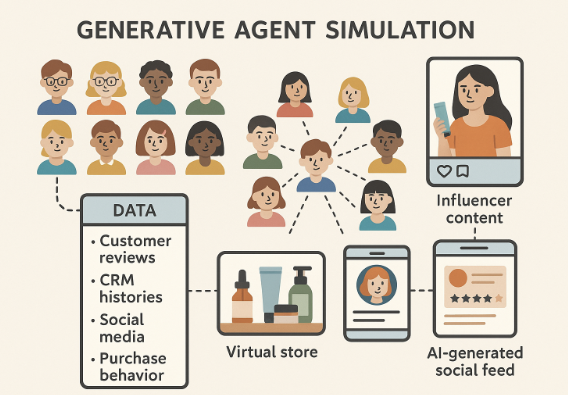
- AI agentssimulate thousands of actors in 24h (instead of 3 months)
- An analytical enginemeasuresand reveals what truly drives KPI changes
- AI Program Managersuggests experiments that most efficientlyeliminate uncertainty and friction
It helps startups pivot, accelerates PMF and removes guesswork from decision-making. It guides corporations through complex changes in existing processes, with clear ROI. Results:
- Startups reach PMF significantly faster
- Corporations reduce transformation risks
- Everyonestops funding failure
The key is that learning fast is not enough; you must also know what to decide after learning.