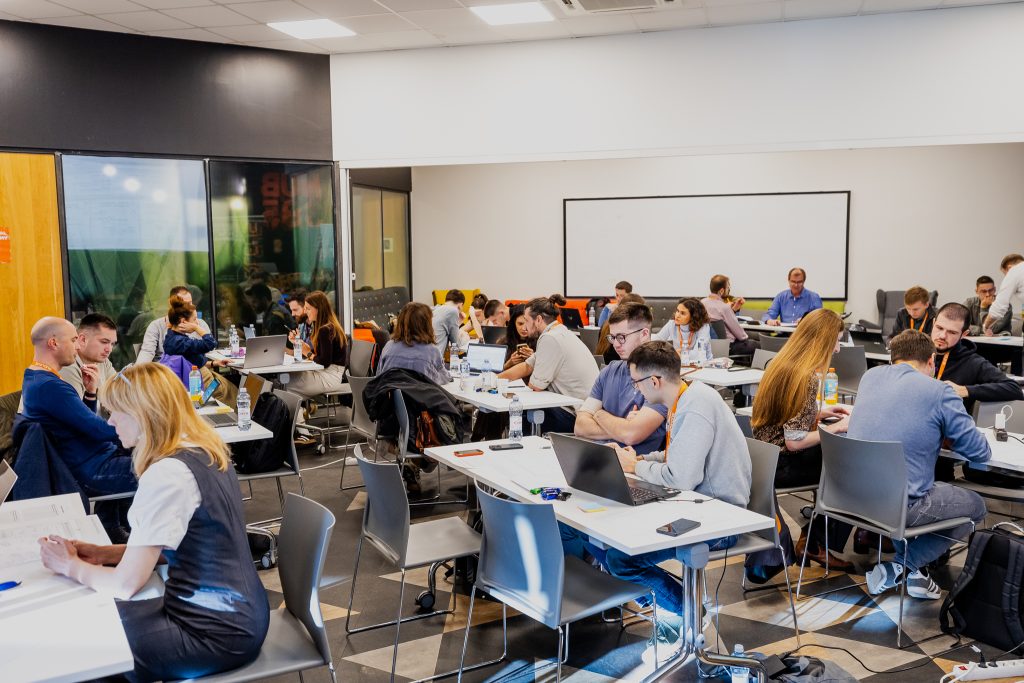
The fourth generation of Nuqleus’ Startup Builder program officially kicked off with the Emerging Science Bootcamp, held from December 9–11 at HUB385 in Zagreb. The program, designed for researchers looking to develop startups based on the results of their own research, attracted 34 applications this year. The selected teams come from renowned institutions such as the Faculty of Electrical Engineering and Computing (FER), the Faculty of Science (PMF), the Medical and Civil Engineering Faculties of the University of Zagreb, as well as prestigious international institutions like the Karlsruhe Institute of Technology (KIT) and the Institute of Biochemistry and Biology at the University of Potsdam.
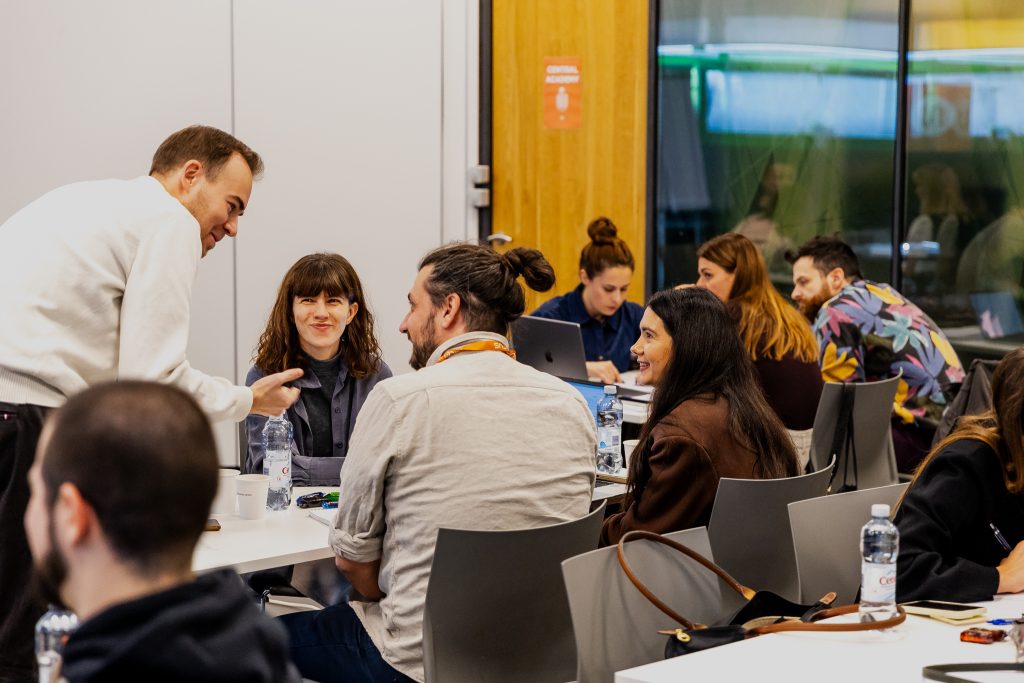
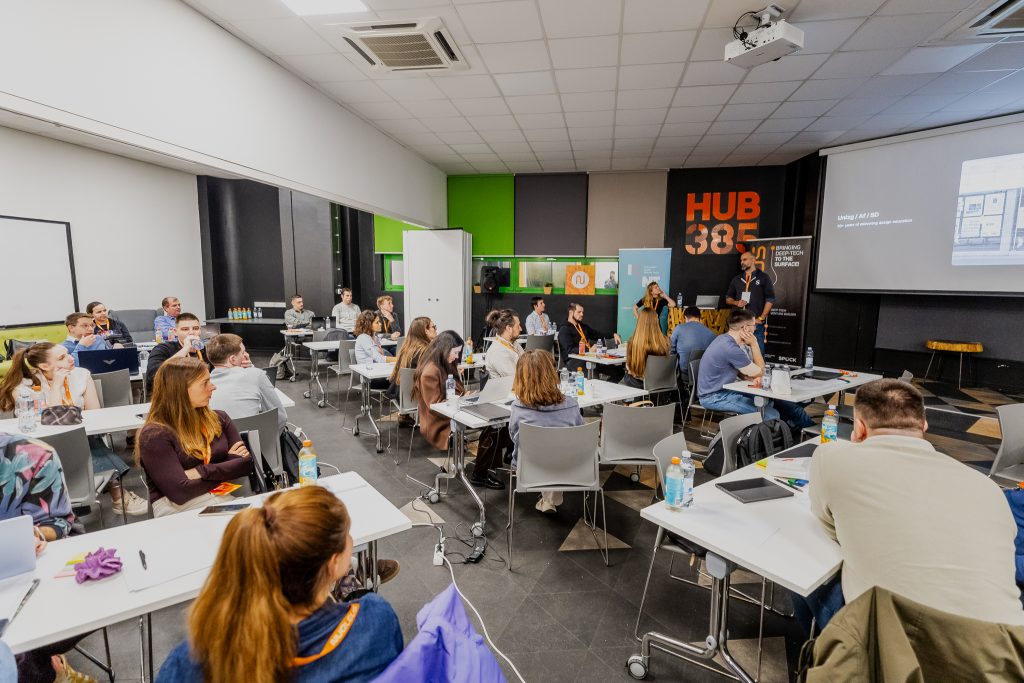
Three days of an intensive bootcamp: From defining the problem, and market positioning, to rapid prototyping
The first day served as an introduction to the program — participants presented their teams, projects, and the challenges they wanted to tackle. Through the “Problem & Market Discovery” workshop led by Sonja Radas from the Economic Institute, teams hypothesized the problems they aimed to solve, positioned their solutions and capabilities within a broader market context, and identified primary market opportunities, laying the groundwork for analyzing market potential and risks in the later stages of the program.
The second day began with a continuation of the first workshop, focusing on the “Market Opportunity Navigator” methodology. Participants then delved into the world of Design Thinking through an introductory session preparing them for hands-on work during this and the following day. Under the guidance of Emil Flatz, Vedran Kasap, and Nina Jelić from the Design Studio at the Faculty of Architecture, University of Zagreb, teams learned the basics and purposes of various design methods, with an emphasis on a human-centric approach and creating value for users.
The third day was dedicated to the practical aspect of Design Thinking through exercises in defining relevant personas, mapping user journeys, and preparing rapid prototypes. Teams made assumptions about their target users and learned how to test these assumptions through quick prototypes, all while receiving continuous mentorship and feedback from the workshop facilitators.


Four generations, one vision: Building a deep-tech community in Croatia
Through the first three generations of Startup Builder, the program has produced numerous teams that successfully validated their ideas, launched startups, and established collaborations with industry and investors, highlighting the importance of connecting science and entrepreneurship. This year’s generation stands out not only for the record number of applications but also for the exceptional interdisciplinarity of the teams, coming from fields such as artificial intelligence, biotechnology, medicine, energy, and other sectors suited for deep-tech solutions. This diversity of knowledge and perspectives creates a strong potential for globally impactful innovations, with expectations for the fourth generation focused on developing market-sustainable solutions, strengthening entrepreneurial skills, and laying the foundation for new successful technology stories.
“Since Nuqleus’ launch in 2022, more than 40 teams have gone through the various phases of the Startup Builder program, with 25 of them founding their own companies. These startups have so far secured over €3 million in investments and public funding, demonstrating the real market potential of ideas born within the program. With this bootcamp, we are kicking off the fourth generation with 15 new teams from fields such as artificial intelligence, medicine, biotechnology, and computer and mechanical engineering, with a strong focus on interdisciplinary solutions.
What makes the fourth generation of Startup Builder truly special is not just the number of teams, but their level of readiness for the real market. We see a significant step forward — teams now come with higher technological readiness, greater interdisciplinary founding teams, and a deeper understanding of the industries they are entering. Moreover, the continuous growth in interest in the program shows that a strong startup community is forming around Nuqleus, growing alongside the quality of the projects. This confirms that we are building not just individual companies, but a sustainable high-tech ecosystem.”
– Deni Nurkić,
Head of Scientific Portfolio and Knowledge Valorization
What comes after the bootcamp?
The Startup Builder program continues with the first phase, in which teams conduct a detailed exploration of the market potential of their ideas and analyze risks with the goal of (in)validating their solutions. Participants will learn about intellectual property management, market research, pitching their ideas, and funding opportunities for their startups. Those who demonstrate the greatest progress will advance to the second phase of the program, which combines education, promotion, networking, access to resources, and connections with investors.
The next workshop, “Startup Introduction”, taking place on December 18, will introduce participants to the basics of launching a startup, the startup lexicon, and key concepts.