In cooperation with British Embassy Zagreb, Nuqleus organized an intensive four-day bootcamp titled “Deep-Tech in the Business Arena” from November 24 to 27. This program is a continuation of last year’s successful initiative, when Nuqleus, together with the U.S. Embassy, brought in American experts in science commercialization. The format proved highly valuable for the local deep-tech community, so this year the initiative continued with a new international collaboration, this time with the most developed startup ecosystem in Europe.
Strengthening the Deep-Tech Connection between the UK and Croatia
The main mission of the bootcamp was to connect the British and Croatian innovation ecosystems, exchange best practices, and lay the foundation for long-term cooperation. Four mentors from the United Kingdom, experts in technology transfer, investments, innovation commercialization, and go-to-market strategies, joined Croatian entrepreneurs, researchers, and institutions to share their experience and broaden perspectives.
The program included 11 deep-tech startups that have completed the Nuqleus Startup Builder program and are currently in the investment-raising phase: Luxyon, eDNAture, Fibryon, DELTAsort Robotics, Calirad, P3 Therapeutics, VirusHunter, TINFE HTS, Crobotic Solutions, InSky Solutions, and VaMa – artificial lens capsule.
Leading Croatian scientific institutions and the broader public also participated.
Pitching, Investments, and Insights into EU and UK Markets
The first day was dedicated to startup presentations. Mentors Tony Kypreos and Tony Hughes (Global Entrepreneur Programme, UK), Quentin Lacionta (French Innovation Club Croatia), and Vedran Blagus (Feelsgood Capital Partners) provided direct feedback, strategic guidance, and comments related to market potential, positioning, and investment readiness.
Following the startup pitches, lectures were held on creating an investment plan and on differences in investment approaches and climates across Europe – an essential topic for startups targeting international markets.
Technology Transfer and Deep Tech Talks Conference
On the second day, the British mentors met with representatives of Croatian scientific institutions: Ruđer Bošković Institute, Institute of Economics Zagreb, Faculty of Kinesiology, Faculty of Pharmacy and Biochemistry, Faculty of Food Technology and Biotechnology, Faculty of Electrical Engineering, Mechanical Engineering and Naval Architecture in Split, Institute of Physics, the Biocentre, Faculty of Economics and Business Zagreb, RIT Croatia, Faculty of Mechanical Engineering and Naval Architecture in Zagreb.
Discussions focused on exchanging experiences in technology transfer, with particular emphasis on highly regulated fields such as medtech, as well as broader areas such as software technologies.
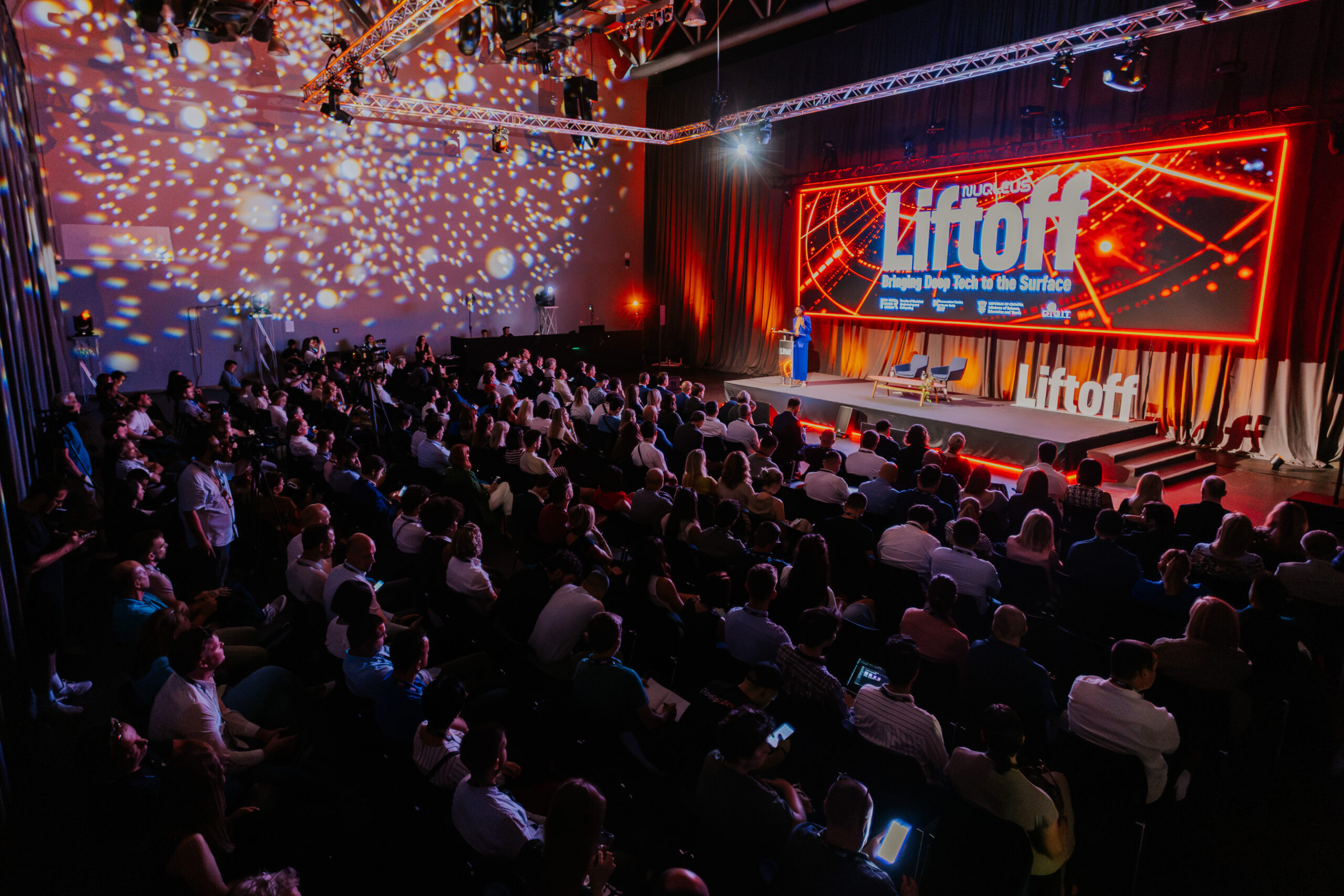
Later that day, Nuqleus hosted its Deep Tech Talks conference, aimed at connecting the Croatian deep-tech and startup communities. Speakers Tony Kypreos and Tony Hughes, together with Quentin Lacointa, discussed the future of innovation in Europe. The conference program was opened by Samantha Dunger, Deputy Head of Mission at the British Embassy in Zagreb, followed by Ante Lončar from the Croatian Ministry of Science, Education and Youth, who presented the DIGIT project and upcoming calls.
Visiting Infobip, Market Strategy Training, and Risk Management
On the third day, the UK mentors visited the campus of Croatian tech company Infobip, where they learned about the company’s work, innovation culture, and growth plans.
The program continued with workshops on key commercial topics: a lecture by Tony Hughes on detecting, selecting, and targeting the UK market, followed by a session on building a successful go-to-market strategy led by Margareta Klinčić Tremac.
The final day focused on understanding and managing risks, from legal and tax to operational and partnership-related, which is often a critical step in the development of any deep-tech startup. The lecture was delivered by Joanne Derbyshire from Inventya, a long-time expert in advising innovative companies.
Strengthening the Foundation for a New Generation of Deep-Tech Leaders
The “Deep Tech in the Business Arena” bootcamp demonstrated just how essential international collaboration is for developing competitive deep-tech innovations. By connecting British and Croatian experts, institutions, and startup founders, new foundations have been created for projects, partnerships, and investments that can position Croatian innovations on the global stage.
Nuqleus continues to build bridges between science and international ecosystems, creating an enabling environment for the growth of the next generation of deep-tech entrepreneurs.