Biotech
Healthtech
AI in healthcare
Generation: 2026.
Founders: Lorena Derežanin, Zvonimir-Zoltan Marić, Sandra Kolundžija, Mateja Sigur
Business model: B2B, B2B2C, SaaS/PaaS
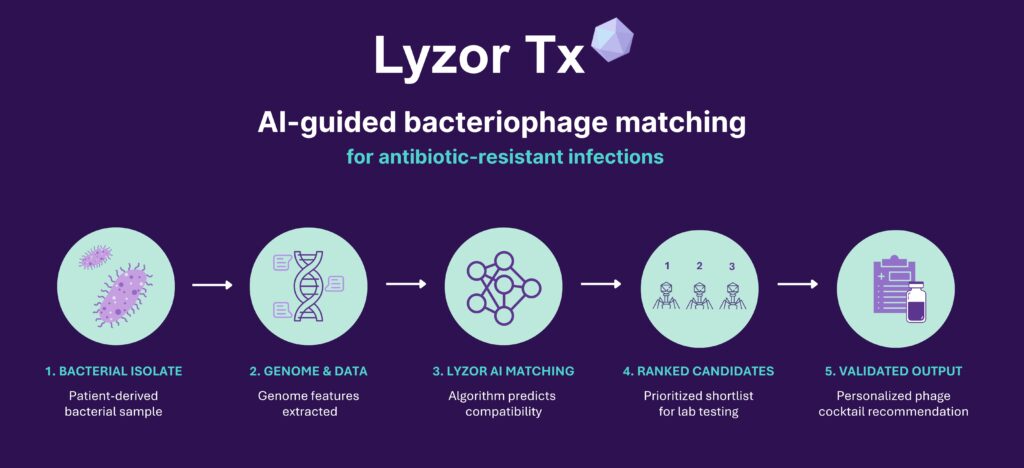
Lyzor Therapeutics is developing an AI platform for predicting interactions between bacteriophages and bacteria. The goal is to accelerate and reduce the scope of laboratory testing of bacteriophages needed to identify therapeutic candidates for treating antibiotic-resistant bacterial infections. Our model ranks bacteriophages according to their predicted effectiveness against a specific bacterium, helping laboratories, hospitals, and industry partners make faster decisions and develop personalized therapeutic solutions more efficiently.
Problem
Bacterial resistance to existing antibiotics is increasingly reducing their effectiveness. Bacteriophage therapy using viruses that specifically attack and destroy bacteria is one of the promising alternatives against antibiotic-resistant bacterial infections. However, finding the right bacteriophage to treat a patient is a slow, expensive, and time-consuming process that requires experimental testing of a large number of bacteriophages, which limits the wider application of bacteriophage therapy in clinical settings. For some patients, time is absolutely critical for example, in life-threatening infections or cases where the only alternative is amputation, where any delay in treatment can have serious consequences.
Solution
We are developing a machine learning model that, based on genomic and biological features, predicts which bacteriophages have the highest probability of destroying a specific bacterium. Instead of random and extensive laboratory testing, the platform provides a ranked list of candidates, leading to significantly lower costs and reduced time spent on testing. Our initial focus is experimental validation of the model on clinical E. coli isolates and bacteriophages, with the goal of demonstrating that the model can reduce the number of laboratory tests required while maintaining a high probability of identifying active therapeutic candidates.